November 2026
Hair Transplant Aftercare: Recovery and Healing Timeline Day by Day
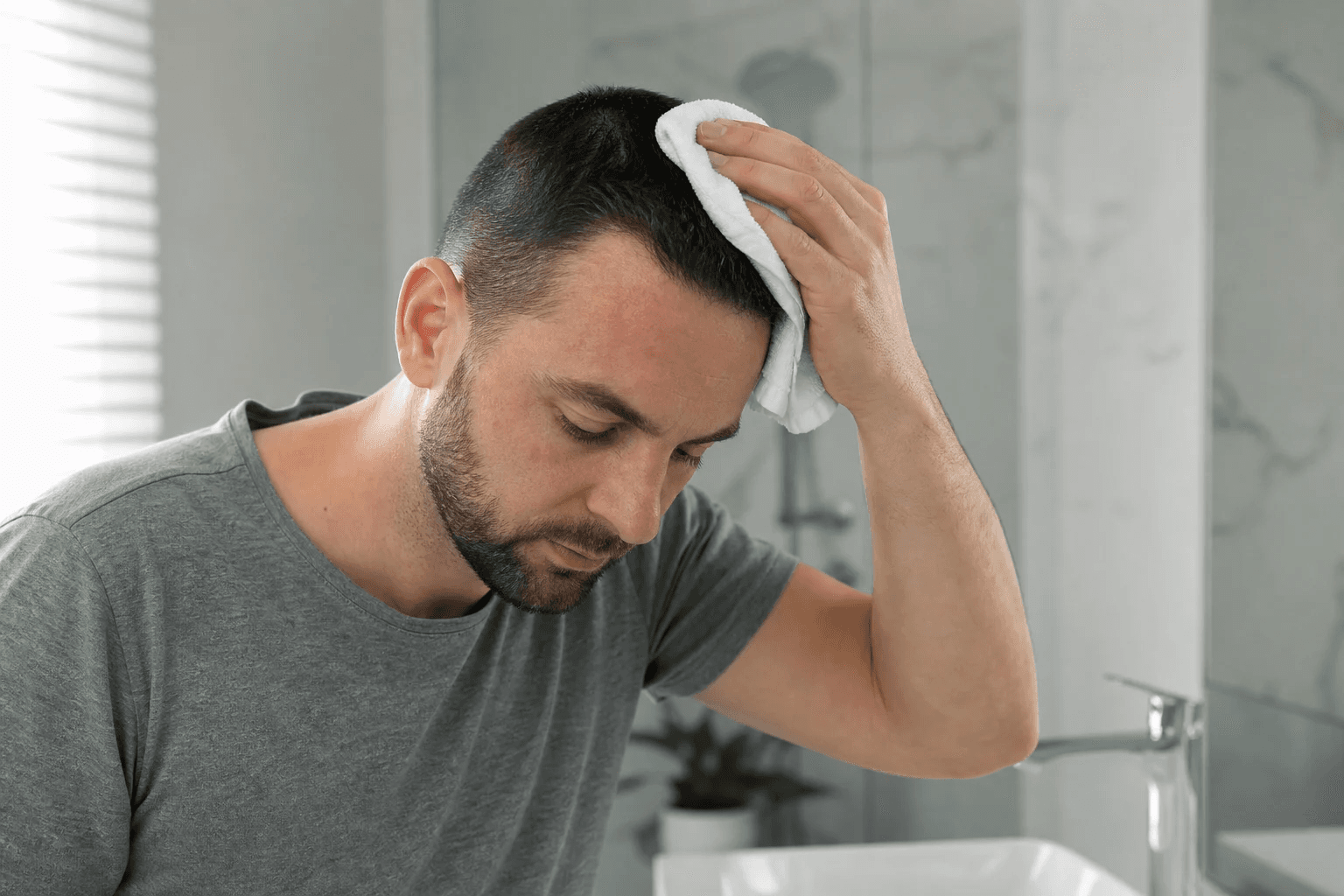
A practical guide to hair transplant aftercare, covering washing, sleeping, exercise, swelling, crusts, shedding, sun exposure, and the recovery timeline from day one to the final result.
- Hair Transplant
- Aftercare
- Hair Loss
- Recovery
- Hair Restoration
A hair transplant does not end when the procedure is finished. The recovery period is an important part of the treatment, especially during the first two weeks when newly transplanted grafts are still vulnerable to pressure, friction, and accidental trauma.
Knowing what to expect can make the recovery much easier. Redness, swelling, itching, crusting, and temporary shedding can all be part of a normal healing process. At the same time, certain symptoms require medical attention.
This guide explains what typically happens after a hair transplant, from the first few days through the first year, and what you should and should not do during each stage.
Important: Recovery protocols vary between clinics and procedures. The instructions provided by your treating doctor or hair-transplant clinic should always take priority over general advice.
What to Expect After a Hair Transplant
The recovery process happens gradually rather than all at once.
During the first few days, the scalp begins closing the tiny wounds created during graft extraction and implantation. The recipient area may become red and swollen, while small crusts begin forming around the transplanted follicles.
During the following weeks, the grafts become increasingly secure and the scalp gradually returns to normal.
The transplanted hairs may then shed during the second to fourth month. This can look alarming, but temporary shedding does not necessarily mean the grafts have been lost. The follicle remains beneath the skin and can later enter a new growth phase.
New visible growth commonly begins around the fourth month, with density and hair thickness continuing to improve for many months afterward.
Hair Transplant Recovery Timeline at a Glance
| Recovery stage | What usually happens |
|---|---|
| Day 1–3 | Grafts are extremely delicate; redness and swelling may develop |
| Day 4–7 | Grafts begin becoming more secure; crusts remain visible |
| Day 8–14 | Crusting gradually decreases; itching may occur |
| Week 3–4 | Most everyday activities gradually return |
| Month 2–4 | Temporary shedding of transplanted hairs may occur |
| Month 4–6 | New hair growth becomes increasingly visible |
| Month 6–12 | Hair becomes thicker and denser |
| Month 12+ | The result becomes much easier to evaluate |
The First 72 Hours After a Hair Transplant
The first three days require the greatest amount of care.
Freshly implanted grafts have not yet become firmly anchored in the scalp. Pressure, rubbing, scratching, or accidentally hitting the recipient area can interfere with healing.
How Should You Sleep?
Most clinics recommend sleeping on your back with your upper body elevated during the first several nights.
An elevated sleeping position can also help reduce postoperative swelling.
A travel or neck pillow can be useful because it helps keep the head stable and reduces the chance of accidentally turning onto the transplanted area during sleep.
Try to avoid:
- Sleeping directly on the transplanted area
- Pressing the recipient area against a pillow
- Sleeping face-down
- Constantly touching or checking the grafts
- Scratching the scalp
Your clinic may recommend a specific sleeping position for a particular number of days, so follow those instructions if they differ from general guidance.
Should You Touch the Transplanted Area?
During the first few days, avoid unnecessary contact with the recipient area.
Do not scratch, rub, massage, pick at crusts, or attempt to reposition individual hairs.
Even if the scalp feels tight or itchy, touching it repeatedly can irritate the healing skin.
If your clinic provides a spray, lotion, or other postoperative product, use it exactly as instructed.
When Can You Wash Your Hair After a Hair Transplant?
The timing of the first wash differs between clinics.
Some protocols allow the first gentle wash around day 2 or 3, while other instructions may recommend waiting longer. Your surgeon or clinic should tell you exactly when and how to perform your first wash.
The important thing is not simply when you wash, but how you wash.
How to Wash Your Hair Safely
When your clinic gives you permission to wash:
- Use lukewarm water rather than very hot water.
- Avoid directing strong water pressure directly onto the transplanted area.
- Use the shampoo or cleansing product recommended by your clinic.
- Apply the product gently rather than vigorously massaging the scalp.
- Allow any recommended lotion or cleansing product to remain on the scalp for the instructed amount of time.
- Rinse gently without rubbing the grafts.
- Pat the scalp dry rather than aggressively towel-drying it.
- Avoid using a hot blow dryer directly on the recipient area unless your clinic has specifically approved it.
The goal during the early recovery period is gentle cleaning without unnecessary friction.
What Are the Crusts After a Hair Transplant?
Small crusts around the transplanted follicles are a normal part of healing.
They are not simply dirt that needs to be scrubbed away.
Crusting commonly becomes noticeable during the first week and gradually disappears over the following days. Many patients see most of the crusts gone by approximately 10 to 14 days, although the exact timing varies.
Should You Pick the Crusts?
No.
Avoid scratching, picking, peeling, or pulling crusts away manually.
A crust that is still attached should be allowed to loosen naturally according to your clinic's washing protocol.
Trying to remove crusts aggressively can irritate the skin and potentially disturb a graft.
Swelling After a Hair Transplant
Swelling is another common part of early recovery.
It often becomes more noticeable around day 2 to day 4 and may move downward toward the forehead or around the eyes because of gravity.
Although facial swelling can look dramatic, it does not automatically indicate a complication.
Sleeping with the upper body elevated and following your clinic's instructions can help.
If your clinic recommends cooling, follow its specific instructions about where and how to apply it. Avoid placing ice or pressure directly over newly transplanted grafts.
When Is Swelling Concerning?
Contact your medical team if swelling:
- Becomes rapidly worse
- Is severe or predominantly affects one side
- Is accompanied by increasing pain
- Is associated with fever
- Is accompanied by spreading redness or drainage
- Does not begin improving as expected
Hair Transplant Aftercare: Days 4–7
By the middle of the first week, the scalp is beginning to heal, but the transplanted area still requires careful treatment.
The grafts are becoming more secure, yet friction and pressure should still be avoided.
You may notice:
- Crusting
- Redness
- Mild tightness
- Itching
- Swelling that is gradually decreasing
- Numbness or altered sensation in the donor area
These symptoms can vary significantly between patients.
Continue washing according to your clinic's instructions and resist the temptation to remove crusts manually.
What Should You Avoid During the First Week?
Avoid activities that cause significant sweating or put pressure on the scalp.
This generally includes:
- Heavy exercise
- Running
- Weight training
- Contact sports
- Swimming
- Saunas and steam rooms
- Direct strong sunlight
- Scratching
- Tight hats or helmets
- Aggressive hair styling
- Hair dyes and chemical treatments
Hair Transplant Aftercare: Days 8–14
The second week is usually when restrictions begin to ease.
The grafts are considerably more secure than they were immediately after surgery, but the recipient skin may still be pink, sensitive, or slightly uneven.
Itching is also common during this period.
How Can You Manage Itching?
The most important rule is simple:
Do not scratch the transplanted area.
Instead, follow the moisturizing or scalp-care instructions provided by your clinic.
Gentle washing can help keep the scalp comfortable, but vigorous rubbing should still be avoided.
If itching becomes severe, persistent, or is accompanied by increasing redness, pain, pus, or swelling, contact your clinic.
When Can You Exercise After a Hair Transplant?
Returning to exercise should be gradual.
Walking and light activity may be possible within several days for many patients, but strenuous exercise should generally wait longer.
A common recovery pattern is:
| Activity | Typical timeframe |
|---|---|
| Gentle walking | Several days, if cleared |
| Light exercise | Around 1–2 weeks, depending on healing |
| Moderate exercise | Around weeks 3–4 |
| Heavy weight training | Around week 4 or later |
| Running | Around week 4 or later |
| Contact sports | Around weeks 6–8 or when cleared |
These are general reference ranges, not universal instructions.
Sweating, increased blood pressure, accidental contact, and friction are some of the reasons strenuous exercise is restricted during early recovery.
If your procedure was extensive or your work is physically demanding, your doctor may recommend a longer recovery period.
When Can You Go Swimming?
Swimming should generally be postponed during the early healing period.
Pools expose healing skin to chlorine and other chemicals, while lakes, rivers, and oceans can expose the scalp to microorganisms and other contaminants.
Many postoperative protocols recommend waiting approximately four weeks before returning to swimming, but the correct timing depends on how your scalp has healed.
Always get clearance from your treating clinic before returning to swimming.
When Can You Use a Sauna or Steam Room?
Heat and excessive sweating are not ideal for freshly healing scalp tissue.
Saunas, steam rooms, and similar high-heat environments are commonly avoided for approximately four to six weeks after a hair transplant.
Again, your clinic's instructions should take priority.
When Can You Wear a Hat After a Hair Transplant?
Headwear can create pressure and friction against newly transplanted grafts.
For that reason, avoid tight caps, helmets, and other restrictive headwear during the earliest stage of recovery.
A loose, soft covering may be permitted by some clinics after approximately 10–14 days, but you should only wear one once your treating team has cleared it.
Motorcycle and bicycle helmets require particular caution because they create direct pressure and friction.
Protecting Your Scalp From the Sun
UV exposure is another important consideration during recovery.
Healing skin can be more sensitive to sunlight, and prolonged sun exposure may contribute to persistent redness or changes in pigmentation.
During the early recovery period:
- Avoid prolonged direct sunlight.
- Wear approved loose headwear once your clinic allows it.
- Follow your clinic's advice about when sunscreen can safely be used.
- Do not apply products to healing wounds unless they have been approved by your medical team.
Many clinics recommend being especially careful with direct sun exposure for several weeks or longer.
Month 1: Returning to Normal Life
By approximately one month, many patients have returned to most normal daily activities.
The scalp may still have some redness, and the hair may not look dramatically different yet.
At this stage, you may gradually return to activities such as:
- Exercise
- Normal showering
- Hair styling
- Regular work
- Social activities
However, the exact timing depends on the procedure, the condition of your scalp, and your surgeon's instructions.
What About Haircuts?
The donor area can often be trimmed sooner than the recipient area.
The transplanted region requires more caution because cutting or manipulating the hair too aggressively can irritate healing skin.
Your clinic may recommend using scissors initially and waiting longer before using electric clippers over the recipient area.
Can You Dye Your Hair After a Hair Transplant?
Hair coloring and bleaching involve chemicals that can irritate healing skin.
For this reason, it is generally better to postpone coloring or bleaching until the scalp has fully recovered and your doctor has given you permission.
Do not assume that because the scalp looks healed it is automatically ready for chemical treatments.
Month 2–4: The Shedding Phase
This is one of the most misunderstood stages of hair transplant recovery.
Around two to four months after the procedure, many transplanted hairs begin to shed.
Seeing transplanted hairs fall out can understandably make patients worry that the procedure has failed.
In many cases, however, this is a normal stage of the hair cycle.
The visible hair shaft can shed while the follicle remains inside the scalp.
This period is sometimes referred to as shock shedding or is associated with the transplanted follicles temporarily entering the resting phase.
Does Shedding Mean the Grafts Are Lost?
Usually, no.
The transplanted follicle can remain in the scalp even after the visible hair has fallen out.
The follicle can later transition back into its growth phase, which is why new visible growth generally becomes more noticeable around the fourth month and continues developing afterward.
This is one of the reasons hair transplant results cannot be judged a few weeks after surgery.
What Is Shock Loss?
Some patients also experience temporary thinning of existing hair around the transplanted region.
This is commonly called shock loss.
It can affect native hairs that were already present near the treatment area and may temporarily make the scalp appear thinner.
If you experience significant or persistent hair loss, speak with your doctor rather than assuming that it is normal postoperative shedding.
Month 4–6: New Hair Growth
Around the fourth month, early new growth may begin becoming visible.
The first hairs can be:
- Fine
- Thin
- Lighter in appearance
- Unevenly distributed
This does not necessarily represent the final appearance.
Hair follicles do not all enter the growth phase at exactly the same time, so one part of the scalp may appear to develop faster than another.
Over the following months, the hairs generally become thicker and more noticeable.
Month 6–12: Increasing Density
Between approximately six and twelve months, the result usually becomes much easier to see.
The transplanted hairs can continue increasing in:
- Thickness
- Length
- Density
- Pigmentation
- Overall visual coverage
The hairline may become more defined and the transition between transplanted and existing hair can look increasingly natural.
However, individual growth rates vary.
Some patients see substantial improvement earlier, while others continue developing beyond the first year.
When Is the Final Hair Transplant Result Visible?
A hair transplant is a long-term process rather than an overnight transformation.
A noticeable result may be present around six months, but the final outcome is commonly assessed around 12 months or later.
Some areas, particularly the crown, can take longer to mature.
A broader timeframe of approximately 10–18 months is sometimes used when discussing the full maturation of a transplant.
Your surgeon is in the best position to assess whether your progress is appropriate for your procedure.
What Happens to the Transplanted Hair Long Term?
Hair follicles used for transplantation are generally taken from areas that are more resistant to the effects responsible for androgenetic hair loss.
Because of this, transplanted hairs can have long-term survival.
However, this does not mean that all of the original, non-transplanted hair is permanently protected.
Your native hair can continue to thin over time.
This is why long-term hair-loss management and medical follow-up can remain important even after a successful transplant.
What If You Accidentally Bump Your Head?
Accidentally bumping your head can be frightening after a transplant, especially during the first few days.
The first thing to do is avoid repeatedly touching or inspecting the area.
Check for:
- Bleeding
- An open wound
- Significant swelling
- Severe pain
- Visible damage to the recipient area
If there is persistent bleeding, an open wound, severe pain, rapidly increasing swelling, or another concerning symptom, contact your treating clinic promptly.
A minor bump does not automatically mean that a graft has been lost.
However, significant trauma during the early recovery period should always be reported to your medical team.
Smoking and Nicotine After a Hair Transplant
Smoking and nicotine can interfere with blood-vessel function and wound healing.
Because transplanted follicles depend on adequate healing and blood supply, many doctors recommend avoiding smoking and other nicotine products during the postoperative period.
This includes considering products such as:
- Cigarettes
- Cigars
- Hookah
- Vapes containing nicotine
- Other nicotine products
If you use nicotine regularly, discuss your postoperative plan with your doctor rather than stopping or changing medications without professional guidance.
Alcohol After a Hair Transplant
Alcohol is commonly restricted immediately after surgery.
It may interact with certain medications and can increase concerns around bleeding and wound healing during the early postoperative period.
Follow the instructions provided by your surgical team regarding when alcohol can safely be resumed.
What About Medications After a Hair Transplant?
Only take medications exactly as prescribed or approved by your doctor.
This may include pain medication, antibiotics, or other treatments provided as part of your postoperative plan.
Do not independently stop medications such as blood thinners or blood-pressure medication.
Similarly, do not restart hair-loss treatments such as minoxidil or finasteride without asking your doctor when it is appropriate to do so.
The correct timing can depend on how the recipient area has healed and the treatment being used.
Do Vitamins and Supplements Speed Up Hair Growth?
Supplements are not a replacement for proper postoperative care.
If you have a documented nutritional deficiency, correcting it may be medically appropriate.
However, taking large amounts of vitamins or supplements does not automatically make transplanted hair grow faster.
A balanced diet containing sufficient protein and nutrients is more important than relying on unneeded supplements.
Warning Signs After a Hair Transplant
Many postoperative symptoms are completely normal, but some require medical attention.
Usually Part of Normal Healing
These can occur during recovery:
- Mild redness
- Small crusts
- Temporary swelling
- Itching
- Mild numbness in the donor area
- Temporary tightness
- Small bumps or pimples during healing
- Temporary shedding
- Uneven early growth
These symptoms should generally improve over time.
Contact Your Clinic if You Notice
- Redness that continues getting worse
- Swelling that does not improve
- Increasing tenderness
- Persistent oozing
- Several painful pimples or pustules
- Crusts that remain firmly attached beyond the expected recovery period
- A significant bump to the head during the early recovery period
Seek Prompt Medical Attention for
- Fever or chills
- Pus or foul-smelling drainage
- Severe or increasing pain
- Rapidly spreading redness
- Skin that feels increasingly hot
- Persistent bleeding
- An open wound
- Severe or rapidly increasing swelling
- Dark or damaged-looking skin
- A shiny bald area that does not appear to be healing
These symptoms can indicate complications such as infection or abnormal wound healing and should not simply be ignored.
Common Hair Transplant Aftercare Mistakes
Scratching the Scalp
Itching is common, but scratching can damage healing skin and disturb crusts.
Washing Too Aggressively
More pressure does not mean faster healing.
The scalp should be cleaned gently according to your clinic's instructions.
Removing Crusts Manually
Crusts should loosen naturally rather than being picked or pulled away.
Returning to Heavy Exercise Too Quickly
Sweating, increased exertion, and accidental contact can create unnecessary problems during early recovery.
Wearing Tight Hats or Helmets
Pressure and friction are particularly undesirable while the grafts are still healing.
Exposing the Scalp to Excessive Sun
Healing skin can be sensitive to UV exposure, so appropriate protection is important.
Starting Products Without Asking Your Doctor
Hair-growth products, styling products, chemical treatments, and supplements should not automatically be restarted simply because the procedure is finished.
Hair Transplant Aftercare: Simple Timeline
Days 1–3
Focus on protecting the grafts.
Sleep with your upper body elevated, avoid touching the recipient area, follow your clinic's washing instructions, and avoid exercise, alcohol, nicotine, and unnecessary pressure.
Days 4–7
Continue gentle washing and avoid scratching.
Crusts and redness are expected, while swelling should gradually begin improving.
Days 8–14
The grafts are becoming more secure.
Continue gentle care while gradually returning to normal routines according to your clinic's instructions.
Weeks 3–4
Many patients can begin returning to more normal exercise and daily activities.
Swimming, intense training, sauna use, and other activities may still require additional waiting.
Months 2–4
Temporary shedding can occur.
Do not assume that shedding means the transplant has failed.
Months 4–6
New growth becomes increasingly visible.
The hairs may initially be fine and uneven.
Months 6–12+
Density and thickness continue improving.
The result becomes progressively easier to evaluate.
Frequently Asked Questions
When can I sleep normally after a hair transplant?
Many clinics recommend sleeping on your back with your upper body elevated for approximately the first week. Side sleeping may be allowed once the recipient area can safely tolerate contact, but follow your clinic's specific instructions.
When are transplanted grafts secure?
Grafts become increasingly secure during the first several days. Research on graft anchoring has shown that the risk of mechanical dislodgement decreases substantially as healing progresses, but clinics commonly maintain a more conservative safety period during the first two weeks.
Can I wash my hair after a hair transplant?
Yes, but only according to your clinic's instructions. The timing of the first wash varies between postoperative protocols. Once washing is permitted, use gentle water pressure and avoid rubbing the recipient area.
When will the crusts disappear?
Crusts commonly loosen and disappear during the first one to two weeks. Do not pick or scratch them off.
Is swelling normal after a hair transplant?
Mild swelling is common, particularly during the first several days. It can move toward the forehead or around the eyes because of gravity. Rapidly increasing or severe swelling should be reported to your medical team.
When can I return to work?
Patients with desk-based jobs may sometimes return within a few days, depending on swelling, discomfort, and the type of procedure. Physically demanding jobs may require more time away from work.
When can I drive?
Do not drive while affected by pain medication or if you cannot comfortably move your head. Your doctor may also recommend having someone drive you home immediately after the procedure.
When can I wear a hat?
Loose headwear may be permitted after the earliest healing period, but tight hats and helmets should be avoided until your clinic gives you clearance.
Why are my transplanted hairs falling out?
Temporary shedding commonly occurs around the second to fourth month. The visible hair may fall out while the follicle remains in the scalp and later produces new growth.
When will I see new hair growth?
Early visible growth commonly begins around the fourth month, although individual growth rates vary.
When will I see the final result?
A significant improvement may be visible around six months, while the final result is often assessed around twelve months or later. Some patients continue seeing maturation beyond the first year.
Can I use minoxidil after a hair transplant?
Minoxidil should only be restarted when your treating doctor says the scalp has healed sufficiently and the product is appropriate for you.
Can I exercise after a hair transplant?
Light activity may be permitted relatively early, but strenuous exercise, heavy lifting, running, and contact sports generally require longer recovery periods. Follow your clinic's specific timeline.
Can I swim after a hair transplant?
Swimming is usually postponed until the scalp has adequately healed. Many protocols recommend waiting around four weeks, but your clinic should provide the final clearance.
Can I drink alcohol after a hair transplant?
Alcohol is commonly avoided during the first days after surgery because of its potential interaction with medication and its effects on bleeding and recovery. Follow your doctor's instructions.
Can I smoke after a hair transplant?
Nicotine can interfere with blood-vessel function and wound healing. Avoid smoking and other nicotine products during the period recommended by your doctor.
The Most Important Part of Hair Transplant Aftercare
The recovery period can feel slow, particularly when the transplanted hairs begin shedding before new growth becomes visible.
The most important thing is to understand that a hair transplant follows a biological timeline.
Protect the grafts during the early healing period, keep the scalp clean according to your clinic's instructions, avoid unnecessary pressure and friction, gradually return to exercise, protect the scalp from excessive sun exposure, and be patient during the shedding phase.
Most importantly, do not compare your recovery too closely with someone else's. The exact speed of healing and hair growth varies from person to person.
Your surgeon or hair-transplant team should remain your primary source of postoperative instructions.
Final Takeaway
Hair transplant aftercare is not complicated, but it does require consistency.
The first 10–14 days are particularly important for protecting newly transplanted grafts. After that, most restrictions gradually become easier, although strenuous exercise, swimming, heat exposure, and chemical treatments may require additional recovery time.
Temporary shedding around months 2–4 can be completely normal, while new growth often becomes visible from approximately month 4 onward.
By 6–12 months, the transplanted hair can become substantially thicker and denser, with the final result often assessed around one year or later.
If something seems unusual during recovery, do not rely on online timelines alone. Contact the clinic that performed your procedure or consult a qualified medical professional.
Medical disclaimer: This article is intended for general educational purposes and does not replace individualized medical advice, diagnosis, or treatment. Hair transplant recovery protocols differ according to the patient, procedure, grafts, surgical technique, and clinic. Always follow the postoperative instructions provided by your treating doctor.